
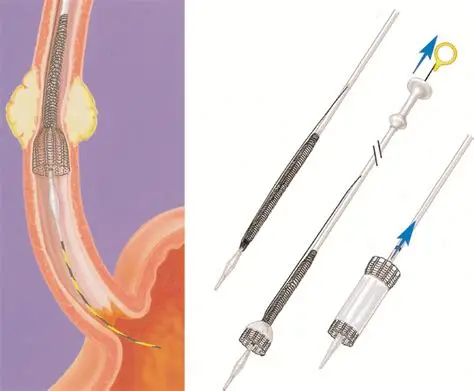
Several conditions can cause narrowing or blockage in the esophagus. Therefore, doctors recommend esophageal stenting when patients experience persistent swallowing problems.
Common Reasons Include:
- Esophageal cancer
- Benign strictures (non-cancerous narrowing)
- Tumor-related obstruction
- Post-surgery complications
- Radiation-induced narrowing
- Chronic acid reflux damage
In addition, early treatment helps prevent weight loss, malnutrition, and discomfort.
You should consult a gastroenterologist immediately if you notice the following symptoms:
- Difficulty swallowing (dysphagia)
- Food getting stuck in the chest
- Pain while swallowing
- Unexplained weight loss
- Persistent vomiting
- Chest discomfort after eating
Although these symptoms may start mildly, they can worsen over time. Therefore, early intervention becomes crucial for better outcomes.
Doctors use different types of stents depending on the patient’s condition.
1. Self-Expandable Metal Stents (SEMS)
These stents expand automatically after placement. Doctors commonly use them for cancer-related blockages because they provide long-term relief.
2. Plastic Stents
Doctors use plastic stents for temporary conditions. These stents are easy to remove and replace when needed.
3. Fully Covered Stents
These stents prevent tissue growth into the stent. Therefore, doctors prefer them when removal may be required later.
4. Partially Covered Stents
These stents allow some tissue attachment, which helps prevent migration.
Esophageal stenting offers multiple advantages. Therefore, it has become a preferred treatment option for many patients.
Key Benefits:
- Immediate relief from swallowing difficulty
- Minimally invasive procedure
- Quick recovery time
- Improved ability to eat and drink
- Reduced hospital stay
- Enhanced quality of life
Moreover, patients can resume daily activities faster compared to traditional surgery.
Dr. Vineet Gupta performs esophageal stenting using advanced endoscopic techniques. The procedure ensures precision, safety, and comfort.
Procedure Steps:
- Pre-Procedure Evaluation
First, the doctor evaluates your condition using endoscopy or imaging tests. This step helps determine the exact location and severity of blockage. - Sedation
The medical team provides mild sedation to ensure patient comfort during the procedure. - Endoscope Insertion
The doctor inserts a thin, flexible tube (endoscope) through the mouth into the esophagus. - Stent Placement
The doctor carefully places the stent at the narrowed area. The stent expands and opens the blocked passage. - Final Check
Finally, the doctor confirms proper placement and ensures smooth passage for food and liquids.
The entire procedure usually takes less than an hour.
Patients recover quickly after the procedure. However, they must follow certain precautions for better results.
Post-Procedure Care:
- Start with liquid diet initially
- Gradually shift to soft foods
- Avoid hard or sticky foods
- Follow doctor’s dietary guidelines
- Take prescribed medications regularly
Furthermore, regular follow-up visits ensure proper functioning of the stent.